Emotion is seen in philosophy as a distortion of truth. How can one come to true conclusions through the filtered lense of emotion. Emotion distorts truth as well as the process of logic for he who possess it.
While this has largely been an unpassable chasm between the two, there have been a few who have seen the potential of the united forces between them. Art and philosphy, while different, have managed to come to a consensus.
The great rift between philosophy and art can be traced as far back as Plato. While Greece was beginning its intellectual revolution, Plato brought forth the first arguments against art. Plato viewed art as a corruption of the true reality that he believed we should all aspire to acheive.
Plato described art as twice removed from reality. Plato was referring, here, to his belief that the world in which we see and live was not true reality, but rather a mirror of true reality. Art being a mirror of the reality in which we live, makes it one more step removed--further from the truth.
Most philosophies that reject art are largely a continuation of these philosphies set by Plato.
Enter Shopenhauer. Shopenhauer looked at the world through a pessimistic lense. All the world was pain. All the world was sorrow. And for Shopenhauer, the only release from this pain was through art--to be held in aesthetic arrest. However temporary, this was the only salvation from a life which should not be lived.
Shopenhauer studied not only the western religions, but was the first great philospher to draw influences from the eastern world as well. He considered Buddism to be more profound than Christianity because of its will to exterminate life by reaching nirvana. These universal religious influences can be seen in his theory of art as well, where he tries to exterminate the will to live by living through art.
In his great work on aesthetics The Birth of Tragedy Nietzsche wrote: "the development of art depends on the dual influence of Apollonian and Dionysian forces." Nietzsche was referring here, to intellectuallity of Apollo, and the emotional, spiritual force of Dionysus. Nietzsche was the first to join the two together.
We can see at once the two extremes manifest in Nietzsche. He adored Schopenhauer and fought for the arts early in his career. Eventually, however, Nietzsche denied Schopenhauer, pessimism and all for which Schopenhauer stood in his later stages.
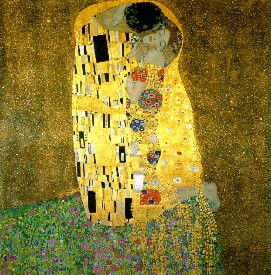
Modern art brings shows the abstract concepts in life in a way that the realism of former ages cannot. Nietzsche's dream on the joining of the intellect and emotion are hereby acheived. In viewing modern art, we can learn more about the philosophy of our age as well.