That having been said, there are several important differences between:
.For a look into where myths came from and where they are going, explore:
or learn how myths can help you in Living Through Myths.Prometheus is the great champion of humanity in western myth. Chained to the the cliffs of Caucasus, we see Prometheus suffering in torment as an eagle is sent to eat out his liver every morning. Every evening it grows back, but still he continues to stand for the virtues that he represents. In him we see the greatness inherit in humanity and something for which we all should strive.
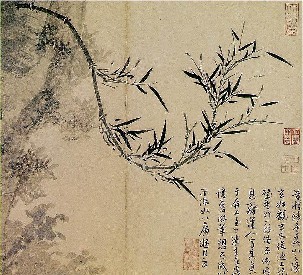
The zen state of oriental paintings relies upon a harmony with existence. The individual is not expected to acheive greatness, but to will himself out of existence. Typically, if we see the figure of an individual at all, it is not a man but rather a deity, greater than man, into which we should strive to join.
More often, however, the art is of a single object--a tree, a leaf, etc. Something to focus our attention on. In focusing our attention on the object, we might come to know the tao (everything/oneness).
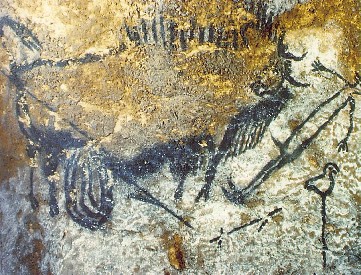
It becomes obvious that the early human psyche was obsessed with death. Myth began as a means to resolve the guilt in the human psyche.
What developed as a result of these feelings and paintings are the ancient rites. These rites developed as a means to ease their own conscience. Unfortunately, today, rites have all but disappeared, and we can see the tragic results in the chaos of everyday life.
Science has gone a long was to overturn many of the conclusions of religion and myth. While this results in man coming closer to knowing the truth, it also means that we must take greater responsibility, as we no longer have the myths to guide us. Without rectifying what science has taught us with our myths, we come to chaos.
The myths today are represented in our arts. The great novels, cinematic arts--these stories are our guides today.
Myths are not lies; they are metaphorical of experiences in the human race. Although a myth may not be literally true, the underlying truth behind the myth is. By understanding myths, we can begin to understand ourselves.